
How to Use Singing Bowls
How to Use Singing Bowls: A Complete Beginner’s Guide
You’ve brought home your first singing bowl, and now you’re wondering: how do I actually use this beautiful instrument? Whether you’re drawn to singing bowls for meditation, stress relief, or sound healing, learning proper techniques will help you unlock their full potential.
This comprehensive guide will walk you through everything you need to know about using singing bowls, from basic playing techniques to advanced applications for meditation and healing.
Before You Begin: Understanding Your Singing Bowl
What’s in the Box?
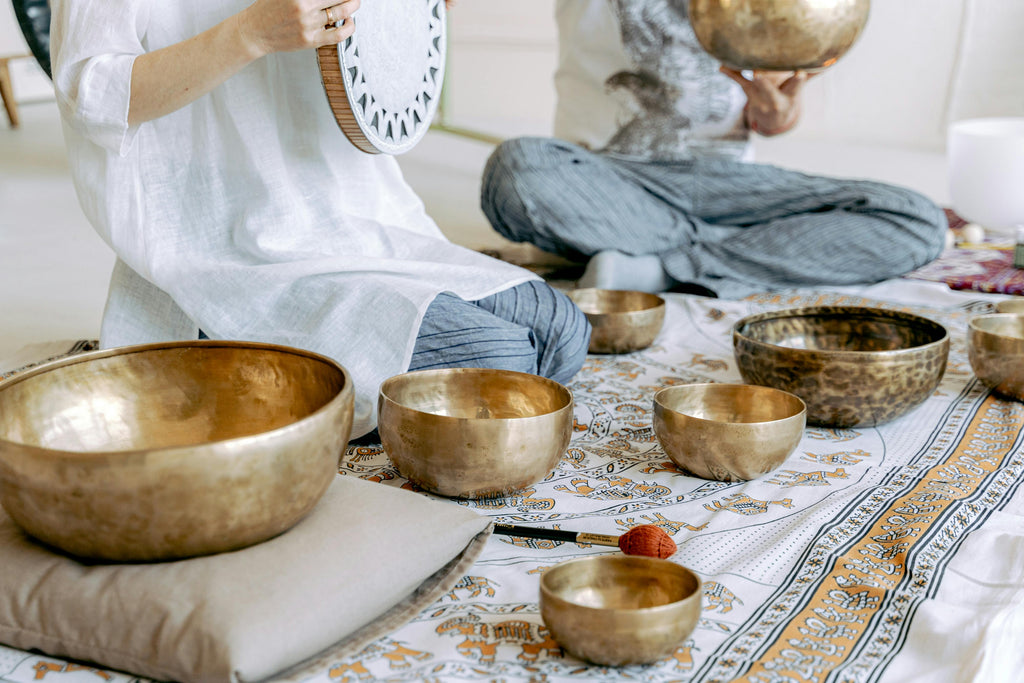
Most singing bowls come with essential accessories:
- The bowl itself: Available in various sizes and materials
- A striker (mallet): Usually wooden, sometimes wrapped in leather or suede
- A cushion or ring: To stabilize the bowl while playing
If your bowl didn’t come with these items, you’ll need to purchase a striker that’s appropriately sized for your bowl. Generally, the striker should be roughly one-third to one-half the diameter of your bowl.
Bowl Placement Basics
Where and how you place your singing bowl affects both sound quality and your playing experience:
On a Cushion: Place the bowl on a cushion or ring cushion to allow it to vibrate freely. This prevents sound dampening and creates the clearest tones.
In Your Hand: You can hold smaller bowls (typically 4-6 inches) in your palm for more intimate practice. Keep your hand flat and fingers extended to avoid dampening the vibrations.
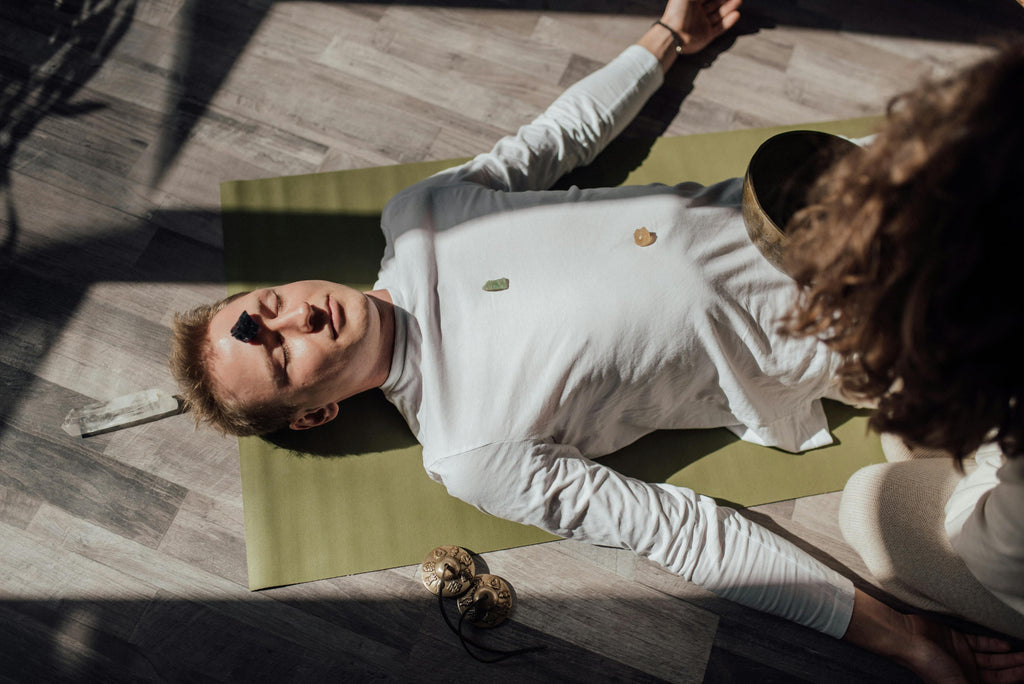
On the Body: Advanced practitioners sometimes place bowls directly on or near the body for targeted vibration therapy. Always use caution with this technique and never place a bowl directly on the head or pregnant belly.
The Two Main Techniques: Striking and Rimming
Technique 1: Striking the Bowl
Striking creates a clear, bell-like tone that’s perfect for beginning meditation sessions, marking time, or simply enjoying the pure sound of your bowl.
Step-by-Step Instructions:
-
Position the bowl: Place it on a stable cushion at about mid-torso height if sitting, or at waist height if standing.
-
Hold the striker: Grip the striker like a pencil, about halfway down the handle. Your grip should be firm but not tense.
-
Angle matters: Hold the striker at approximately a 45-degree angle to the bowl’s rim.
-
Strike gently: Using moderate force, strike the outer rim of the bowl. The striker should make contact briefly before bouncing away—not staying pressed against the rim.
-
Location, location: Strike at the “sweet spot”—usually the widest part of the bowl’s outer wall, about halfway between the rim and base.
-
Listen deeply: After striking, close your eyes and follow the sound as it evolves and fades. Notice how the tone changes and eventually disappears.
Common Striking Mistakes:
- Too hard: Striking too forcefully creates harsh, clanging sounds. Singing bowls respond best to gentleness.
- Too soft: Striking too softly produces weak tones that fade quickly.
- Wrong angle: Hitting straight on (90 degrees) or too shallow (under 30 degrees) produces inferior sound quality.
- Staying in contact: Letting the striker rest against the bowl after striking dampens the vibration.
Finding Your Bowl’s Voice:
Experiment with different striking locations around the rim. Most bowls have slight variations in tone depending on where you strike. Some spots may sound clearer or more resonant than others.
Technique 2: Rimming (Singing) the Bowl
Rimming creates the continuous “singing” sound that gives these instruments their name. This technique requires more practice but produces sustained tones ideal for meditation and healing work.
Step-by-Step Instructions:
-
Start with a strike: Begin by striking the bowl to initiate vibration.
-
Position the striker: Holding it like a pencil, place the striker against the outer rim at a 45-degree angle.
-
Apply pressure: Press the striker firmly against the rim—this is crucial for producing sound.
-
Move in circles: Begin moving the striker around the rim in smooth, even circles. Move clockwise or counterclockwise; both directions work, though some traditions prefer clockwise.
-
Maintain contact: Keep the striker in constant contact with the rim as you circle. Any break in contact will stop the singing sound.
-
Keep it steady: Maintain consistent pressure and speed. The bowl will begin to “sing” after one or two complete rotations.
-
Speed up gradually: If needed, slightly increase speed until the bowl reaches its full singing volume.
Common Rimming Challenges:
- Chattering: If you hear a rapid clicking or chattering sound, you’re moving too fast with too little pressure. Slow down and press firmer.
- No sound: Usually means insufficient pressure. Press the striker more firmly against the rim.
- Inconsistent tone: Often caused by varying pressure or speed. Focus on smooth, even movements.
- Losing the sound: Happens when you break contact with the rim or decrease pressure. Maintain firm, steady contact.
Advanced Rimming Tips:
- Use the leather or suede-wrapped part of the striker for warmer, smoother tones
- Use the wooden end for brighter, more penetrating sounds
- Experiment with speed—slower movements create deeper tones; faster movements create higher, more energized sounds
- Try rimming with the bowl placed on different surfaces to hear how it affects the resonance
Creating Your Sound Healing Practice
Setting Up Your Space
Create a dedicated space for your singing bowl practice:
- Quiet location: Choose a spot where you won’t be interrupted
- Comfortable seating: Use a cushion, chair, or mat that supports good posture
- Pleasant ambiance: Consider soft lighting, candles, or incense if desired
- Bowl placement: Position the bowl where you can easily reach it while maintaining a comfortable posture
Basic Meditation Practice with Singing Bowls
This simple practice is perfect for beginners:
-
Settle in: Sit comfortably with your spine upright but relaxed. Take several deep breaths.
-
Set intention: Silently state your intention for the practice (relaxation, clarity, healing, presence).
-
Play the bowl: Strike the bowl gently and listen as the sound fades. Or rim the bowl, creating a sustained tone.
-
Follow the sound: Bring your full attention to the sound. Notice its qualities—volume, pitch, overtones, vibrations.
-
Notice sensations: Pay attention to any physical sensations—tingling, warmth, waves of relaxation.
-
Return when wandering: When your mind wanders (and it will), gently return attention to the sound.
-
Close mindfully: After 10-20 minutes, strike the bowl one final time. Sit in silence for a moment before opening your eyes.
Using Singing Bowls for Different Purposes
For Stress Relief
Play your bowl when you notice stress building throughout the day:
- Strike the bowl and take three deep breaths with each strike
- Rim the bowl for 2-3 minutes, letting tensions melt away
- Focus especially on the vibrations moving through your body
- Practice sound healing meditation regularly for cumulative stress-reduction benefits
For Better Sleep
Create an evening ritual with your singing bowl:
- Play 30-60 minutes before bed to signal wind-down time
- Use slower, lower tones by rimming gently
- Combine with gentle breathing exercises
- Place the bowl near your bed so the vibrations fill your space
For Morning Energy
Wake up your energy with higher, brighter tones:
- Use quicker rimming motions for more energizing sounds
- Strike the bowl several times with intention
- Combine with gentle stretching or yoga poses
- Set positive intentions for your day
For Creative Work
Clear mental clutter before creative sessions:
- Play for 5-10 minutes before beginning work
- Use the sound to mark transitions between different types of tasks
- Notice increased clarity and flow after practice
Working with Chakra Bowls
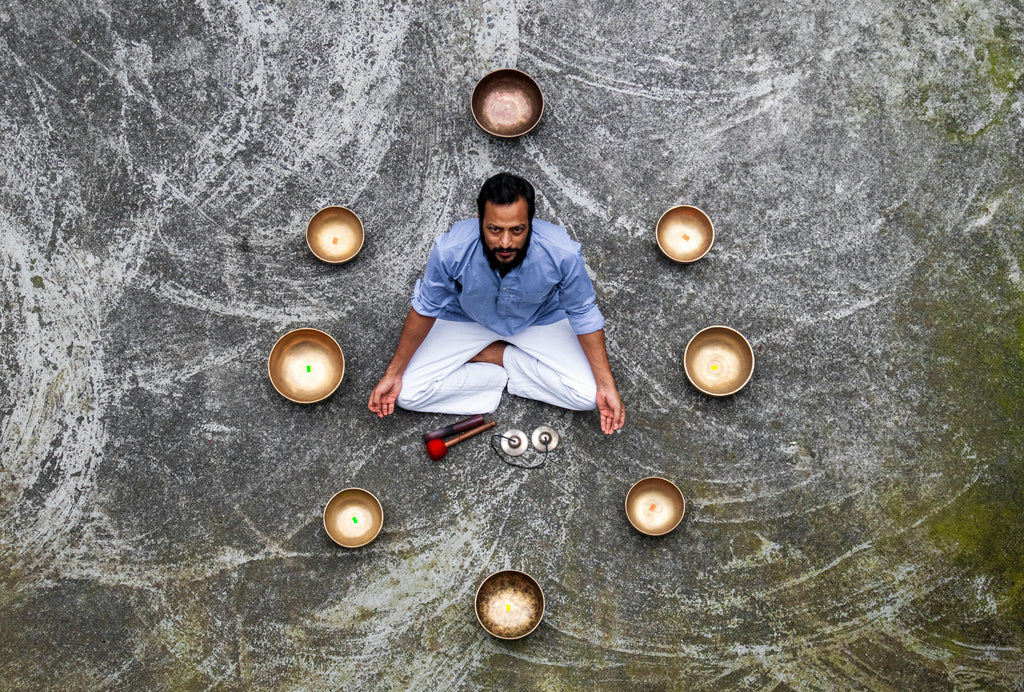
If you have chakra singing bowls, each bowl corresponds to a specific energy center:
- Root (C note): Grounding, security, survival
- Sacral (D note): Creativity, emotions, sexuality
- Solar Plexus (E note): Personal power, confidence
- Heart (F note): Love, compassion, connection
- Throat (G note): Communication, expression, truth
- Third Eye (A note): Intuition, insight, vision
- Crown (B note): Spiritual connection, consciousness
Play the bowl corresponding to the chakra you wish to work with, or progress through all seven in sequence from root to crown.
Learn more about chakra frequencies in our guide to singing bowl frequencies.
Care and Maintenance
Cleaning Your Singing Bowl
Regular cleaning: - Wipe with a soft, dry cloth after each use - Remove fingerprints and dust regularly - For metal bowls, occasionally polish with a gentle metal cleaner designed for musical instruments
Deep cleaning: - For stubborn tarnish on metal bowls, use a paste of baking soda and water - Gently scrub with a soft cloth or sponge - Rinse thoroughly and dry completely - Avoid harsh chemicals or abrasive materials
Crystal bowl care: - Clean with mild soap and warm water - Dry thoroughly to prevent water spots - Handle carefully to avoid chips or cracks - Store in a padded case or on a stable cushion
Storage
- Store in a clean, dry place away from temperature extremes
- Use a cushion or padded surface to prevent scratches
- Keep away from high-traffic areas where they might be knocked over
- Store strikers separately to prevent accidental contact
Protecting Your Investment
Quality singing bowls can last generations with proper care:
- Never drop or strike your bowl with anything except its proper striker
- Don’t expose to extreme temperatures or direct sunlight for extended periods
- Transport in a padded bag or case
- Handle crystal bowls with extra care due to their fragility
Troubleshooting Common Issues
My Bowl Won’t Sing
Possible solutions: - Apply more pressure with the striker - Slow down your circular motion - Check that the rim is clean and smooth - Ensure the bowl is on a soft surface that allows vibration - Try a different striker—size and material matter
The Sound Is Inconsistent
Possible solutions: - Practice maintaining even pressure and speed - Check that the rim isn’t damaged or rough - Ensure the bowl is properly balanced on its cushion - Warm up with striking before attempting to rim
The Bowl Sounds Harsh or Metallic
Possible solutions: - Strike more gently - Aim for the bowl’s “sweet spot” on the outer wall - Clean the bowl—dirt or oils can affect sound quality - Try different striking angles
I Can’t Maintain Concentration
Possible solutions: - Start with shorter sessions (5 minutes) - Focus on the physical sensation of vibrations, not just the sound - Try striking (easier to maintain attention) before rimming - Practice in a quieter environment - Be patient—concentration improves with regular practice
Advancing Your Practice
As you become comfortable with basic techniques, explore these advanced applications:
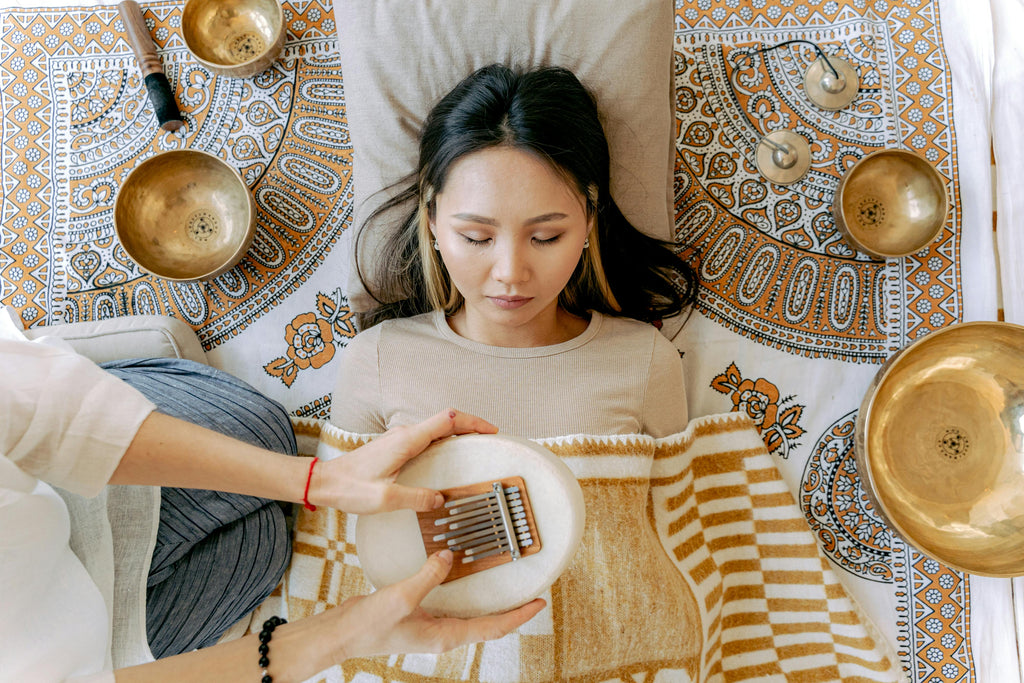
Sound Baths
Create immersive experiences using multiple bowls of different sizes and tones. Alternate between striking and rimming, allowing sounds to overlap and interact.
Body Placement
With proper training, place bowls near specific areas of the body for targeted healing work. Always exercise caution and never place bowls directly on sensitive areas.
Group Practice
Join or create singing bowl circles where multiple practitioners play together, creating rich, layered soundscapes.
Combining with Other Modalities
Integrate singing bowls with: - Meditation practices - Yoga sessions - Breathwork - Massage therapy - Energy healing work
Exploring Different Bowl Types
As your practice develops, you might want to explore: - Different types of singing bowls - Various sizes and tones - Crystal versus Tibetan bowls - Chakra-specific frequencies
Making Singing Bowls Part of Your Daily Life
The true power of singing bowls emerges through consistent practice. Even five minutes daily can:
- Reduce accumulated stress
- Improve emotional regulation
- Deepen meditation practice
- Create moments of peace in busy days
- Develop greater mindfulness and presence
Consider these integration strategies:
Morning ritual: Start your day with a brief singing bowl meditation to set a calm, centered tone.
Midday reset: Use your bowl during lunch or afternoon breaks to release tension and refocus.
Evening wind-down: Play before bed to signal to your nervous system that it’s time to rest.
Stress first-aid: Keep your bowl accessible for moments when stress spikes—even 2-3 minutes of playing can shift your state.
Weekend practice: Dedicate longer sessions on weekends for deeper exploration and healing work.
Your Journey with Singing Bowls
Learning to use singing bowls is both an art and a practice. Be patient with yourself as you develop skill and sensitivity. What matters most isn’t technical perfection but your intention, presence, and openness to the healing vibrations.
Every bowl has its own personality and voice. Spend time getting to know your bowl’s unique qualities. Notice what tones emerge with different techniques. Discover which sounds resonate most deeply with you.
As you continue your exploration, you’ll find that the relationship between you and your bowl deepens. The instrument becomes not just a tool but a companion in your journey toward greater peace, healing, and awareness.
Ready to deepen your practice? Explore our comprehensive singing bowl buyers guide or learn more about the benefits of singing bowl practice.
May your singing bowl practice bring you peace, healing, and profound moments of presence. The ancient tones await your touch, ready to guide you into deeper states of wellbeing and awareness.
Find the perfect singing bowl for your practice in our curated collection. From traditional Tibetan bowls to pure crystal instruments, discover the sound that resonates with your healing journey.
Related post

04
Sep

03
Sep
02
Sep
22
Apr
21
Nov
RECENT POSTS