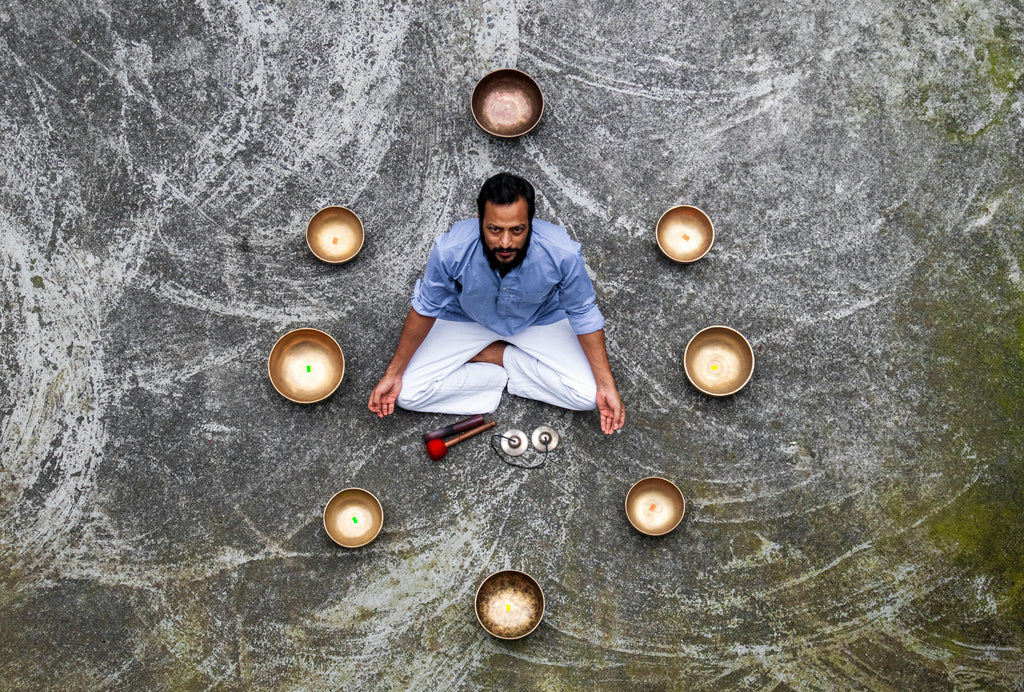

Singing Bowl Sizes Guide
Singing Bowl Sizes Guide: Choosing the Perfect Size for Your Needs
When shopping for your first (or next) singing bowl, one of the most important decisions you’ll make is choosing the right size. Size dramatically affects tone, portability, applications, and overall experience. Whether you’re drawn to the deep, grounding resonance of large bowls or the bright, activating tones of smaller ones, understanding how size influences your practice will help you make the best choice.
This comprehensive guide will help you navigate singing bowl sizes, from petite 3-inch bowls to massive 16-inch+ instruments, so you can find the perfect match for your needs and intentions.
How Singing Bowl Size Affects Sound
Size is the primary factor determining a singing bowl’s fundamental frequency and tonal characteristics:
Large Bowls (10-16+ inches)
Sound qualities: - Deep, low-frequency tones - Extended sustain (vibrations last longer) - Rich, grounding resonance - More complex overtones - Fuller, more enveloping sound
Physical characteristics: - Produce strong, palpable vibrations - Heavier (can range from 3-10+ pounds) - More challenging to play and transport - Require larger, firmer strikers - Command more physical and energetic space
Best for: - Group sound baths and ceremonies - Deep meditation and grounding work - Professional sound healing practitioners - Working with lower chakras (root, sacral, solar plexus) - Creating immersive sonic environments
Medium Bowls (7-9 inches)
Sound qualities: - Balanced mid-range tones - Moderate sustain - Versatile frequency range - Pleasant harmonics without being overwhelming - Clear, resonant voice
Physical characteristics: - Manageable weight (1-3 pounds typically) - Easy to play for most people - Portable enough for travel - Work well with standard strikers - Good balance of power and practicality
Best for: - Personal meditation practice - Heart and throat chakra work - Beginners learning technique - Home practice spaces - Combining with other sizes for layered sounds
Small Bowls (4-6 inches)
Sound qualities: - Higher-pitched, brighter tones - Shorter sustain - Clear, bell-like quality - More activating and energizing - Precise, focused sound
Physical characteristics: - Lightweight and highly portable - Easy to hold in the palm - Simple to play - Require smaller strikers - Take up minimal space
Best for: - Travel and portability - Upper chakra work (third eye, crown) - Focusing attention and clarity - Adding brightness to multi-bowl practices - Beginners on a budget - Children’s meditation
Extra Small Bowls (3 inches and under)
Sound qualities: - Very high, bright tones - Brief sustain - Delicate, tinkle-like quality - Highly activating - Subtle but clear voice
Physical characteristics: - Extremely lightweight and portable - Can be held with fingers - Very easy to play - Require miniature strikers or can be played with fingers - Minimal storage needs
Best for: - Accent sounds in multi-bowl setups - Precise energy work - Portability (traveling, office desk) - Adding variation to sound healing sessions - Gift giving or introducing others to singing bowls
Singing Bowl Size Chart
Here’s a quick reference guide to help you visualize size options:
| Size Range | Diameter | Approximate Weight | Tone Range | Primary Use |
|---|---|---|---|---|
| Extra Small | 3-4” | 4-8 oz | Very High | Accent, Travel, Children |
| Small | 4-6” | 8-16 oz | High | Personal Practice, Upper Chakras |
| Medium | 7-9” | 1-3 lbs | Mid-Range | Versatile Home Practice |
| Large | 10-12” | 3-6 lbs | Low-Mid | Deep Meditation, Group Work |
| Extra Large | 13-16”+ | 6-10+ lbs | Very Low | Professional, Ceremonies, Sound Baths |
Note: Weight and exact measurements vary significantly based on bowl thickness, metal composition, and construction.
Choosing Size Based on Your Goals
For Personal Meditation
If you’re building a personal meditation practice at home, medium bowls (7-9 inches) often provide the best starting point. They offer:
- Sufficient resonance for deep meditation
- Tones that aren’t too overwhelming in small spaces
- Manageable weight for extended playing
- Versatile enough for various practices
As your practice develops, you might add a smaller bowl for clarity work or a larger one for grounding, but a quality medium bowl will serve you well for years.
For Professional Sound Healing
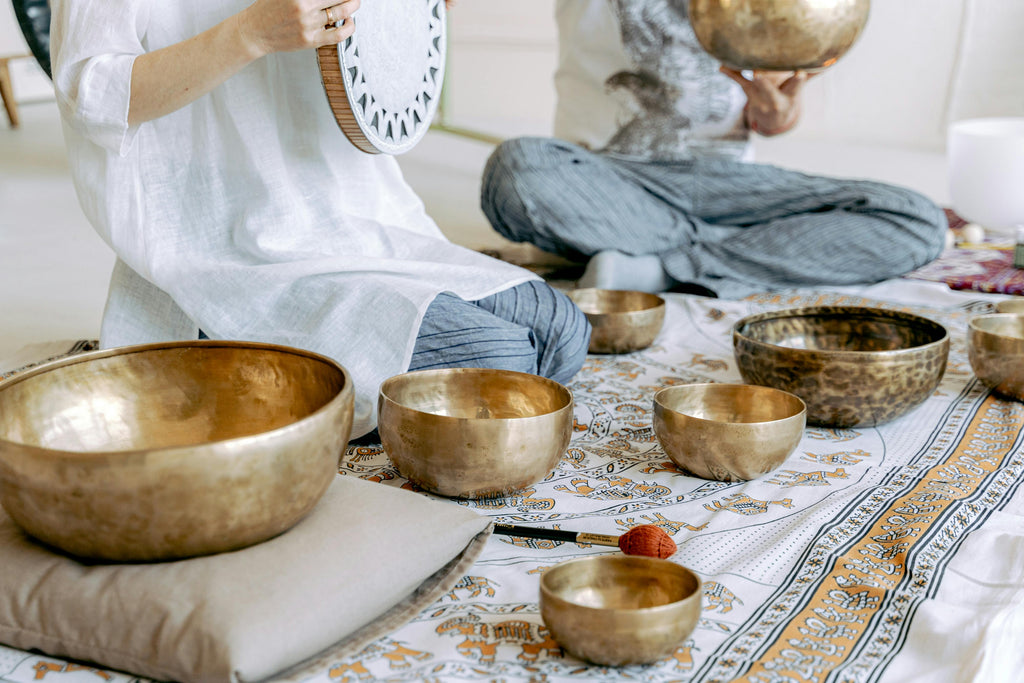
Professional practitioners typically build a collection spanning multiple sizes:
- 1-2 large bowls for foundational tones and group work
- 2-3 medium bowls for versatility and layering
- 1-2 small bowls for higher tones and chakra work
This range allows you to create rich, varied soundscapes and work with clients’ different needs. Learn more about building a professional practice in our singing bowl buyers guide.
For Portability and Travel
If you travel frequently or want a bowl for your office, small bowls (4-6 inches) offer the best combination of portability and effectiveness:
- Fit easily in carry-on luggage or backpacks
- Produce meaningful tones despite compact size
- Can create quick stress-relief moments anywhere
- Won’t dominate small spaces
For Specific Chakra Work
Different chakra traditions associate specific frequency ranges with energy centers, though interpretations vary:
- Root chakra: Large bowls (10-14 inches) in C or D
- Sacral chakra: Large-medium bowls (9-12 inches) in D
- Solar plexus: Medium bowls (8-10 inches) in E
- Heart chakra: Medium bowls (7-9 inches) in F
- Throat chakra: Small-medium bowls (6-8 inches) in G
- Third eye: Small bowls (5-7 inches) in A
- Crown chakra: Small bowls (4-6 inches) in B
To dive deeper into chakra frequencies, read our guide to singing bowl frequencies.
For Children
Small bowls (4-6 inches) work beautifully with children:
- Lightweight enough for small hands
- Not overwhelming in volume
- Naturally engaging without being intimidating
- Teach gentle handling and mindfulness
- Affordable for introducing the practice
For Group Sound Baths
Facilitating group sound experiences requires careful size consideration:
- Start with at least one large bowl (12+ inches) for foundational tones
- Add medium bowls for mid-range complexity
- Include small bowls for brightness and completion
- The larger your group and space, the bigger your primary bowl should be
Crystal vs. Metal Bowls: Size Considerations
Size affects crystal and metal singing bowls differently:
Crystal Singing Bowls
Crystal bowls are typically sized by diameter and come in standardized sizes:
- 6” - 7”: Highest tones, crown chakra
- 8” - 9”: Upper chakras, clear and activating
- 10” - 12”: Mid-range, versatile
- 13” - 14”: Lower chakras, grounding
- 15” - 18”+: Professional, deep bass tones
Size considerations for crystal: - Frosted vs. clear crystal affects tone quality regardless of size - Larger crystal bowls can be quite fragile - Size directly correlates with price—larger bowls are significantly more expensive - Very large crystal bowls may require special supports or stands
Tibetan Metal Bowls
Traditional Tibetan bowls vary more in size, thickness, and shape:
- Depth and wall thickness affect tone as much as diameter
- Antique bowls often have different size-to-tone ratios than modern bowls
- Hand-hammered bowls vary more than machine-made bowls
- Size doesn’t always predict exact frequency due to metallurgic variations
Size considerations for metal: - Heavier bowls (thicker walls) produce longer sustain - Wider, shallower bowls create different overtones than deep, narrow bowls of the same diameter - Antique bowls may sound lower than expected for their size
Size and Playing Technique
Bowl size influences how you play and interact with the instrument:
Holding vs. Cushion Placement
Small bowls (under 6 inches): - Can be held comfortably in your palm during playing - Allow for intimate, close-to-body practice - Easy to move around during energy work
Medium bowls (7-9 inches): - Best placed on cushions for most practices - Some can be held briefly but become tiring - More stable on surfaces than in hand
Large bowls (10+ inches): - Must be placed on stable surfaces or cushions - Too heavy to hold while playing - Require space and sturdy support
Striker Selection
Bowl size determines appropriate striker size:
- Small bowls: Use smaller, lighter strikers (6-8 inches long)
- Medium bowls: Standard strikers work well (8-10 inches)
- Large bowls: Need larger, heavier strikers (10-12+ inches) or padded mallets
Using the wrong striker size makes producing clear tones difficult. Most quality bowls come with appropriately sized strikers, but if purchasing separately, match striker size to bowl size.
Striking vs. Rimming
Small bowls: - Easier to rim but require lighter touch - Produce quicker response when striking - May “chatter” if rimming too quickly
Medium bowls: - Balanced response for both techniques - Forgiving for beginners learning to rim - Produce satisfying strikes without being overwhelming
Large bowls: - May require more pressure and slower rimming speed - Create powerful, prolonged strikes - Need strong, consistent technique for rimming
Learn detailed techniques in our guide on how to use singing bowls.
Building a Collection: Size Progression
Rather than buying one large “perfect” bowl, many practitioners build collections over time:
Starter Collection (1-2 bowls)
- Begin with one quality medium bowl (7-9 inches)
- Add a small bowl (5-6 inches) for variety and upper chakra work
Intermediate Collection (3-4 bowls)
- Maintain your medium foundation bowl
- Add a large bowl (10-12 inches) for grounding work
- Include small and extra-small bowls for full frequency range
- Consider chakra-specific tunings
Advanced Collection (5+ bowls)
- Full set of chakra-tuned bowls spanning sizes
- Multiple large bowls for group work
- Specialty bowls (planetary tunings, specific healing frequencies)
- Both crystal and metal bowl options
Professional Collection (8-12+ bowls)
- Complete chakra sets in both crystal and metal
- Multiple sizes of each tone for different applications
- Specialty instruments (gongs, bells, chimes)
- Backup bowls for travel and teaching
Practical Considerations
Beyond sound and technique, consider these practical factors:
Space Constraints
Small living spaces: - Stick with small to medium bowls - Consider multi-purpose storage (attractive display bowls) - Remember that sound reflects off walls—larger bowls can overwhelm small rooms
Dedicated meditation space: - Medium to large bowls work well - Can accommodate multiple bowl setups - Room for proper cushions and supports
Budget Considerations
Size significantly affects price:
- Small bowls: $30-$100
- Medium bowls: $60-$200
- Large bowls: $150-$500+
- Extra-large professional bowls: $400-$1,500+
Prices vary based on material (crystal vs. metal), quality, and whether bowls are machine-made or hand-hammered.
Quality matters more than size when starting out. A excellent small-to-medium bowl will serve you better than a large but poorly-made bowl.
Physical Ability
Consider your physical capabilities:
- Arthritis or hand weakness: Medium bowls on cushions are easier than holding small bowls
- Limited mobility: Larger bowls require less frequent playing motion to maintain sound
- Sound sensitivity: Smaller bowls produce less overwhelming volumes
Travel Plans
If you want to practice while traveling:
- Prioritize portability with small bowls (4-6 inches)
- Invest in padded travel cases
- Consider multiple small bowls rather than one large bowl
- Crystal bowls are more fragile—metal bowls travel better
Size and Frequency Matching
While size generally correlates with lower frequencies (larger = lower), the relationship isn’t perfectly linear, especially with:
- Chakra bowls: Tuned to specific frequencies regardless of what size might naturally produce
- Planetary bowls: Tuned to cosmic frequencies
- Crystal bowls: Can be manufactured to specific frequencies in various sizes
When purchasing chakra-specific or frequency-specific bowls, verify the actual note/frequency rather than assuming based on size.
Making Your Final Decision
Choose your singing bowl size based on:
- Primary purpose: Meditation, healing, travel, group work?
- Experience level: Beginners often do best with medium bowls
- Budget: Start with what you can afford in good quality
- Physical space: Consider where you’ll use and store it
- Sound preference: What tone range resonates with you?
- Future plans: Will you build a collection or stick with one bowl?
Remember, there’s no universally “best” size. The ideal bowl is the one that resonates with your unique needs, space, and intentions.
Finding Your Perfect Size
The most important factor in choosing singing bowl size is how it resonates with you—literally and figuratively. If possible:
- Listen to bowls of different sizes in person or via high-quality recordings
- Notice which tones and frequencies you’re drawn to
- Consider what feels manageable for your physical abilities and space
- Trust your intuition—you’ll often feel a connection with “your” bowl
Many practitioners report that their bowls “find them” rather than the other way around. Stay open to this possibility, even if it means choosing a different size than you initially intended.
Ready to explore different singing bowl sizes? Browse our complete collection of singing bowls or learn more in our comprehensive singing bowl buyers guide.
Your perfect bowl—in just the right size—is waiting to add its voice to your practice.
Discover singing bowls in every size for every purpose. Explore our curated collection and find the perfect resonance for your healing journey.
Related post

04
Sep

03
Sep
02
Sep
22
Apr
21
Nov
RECENT POSTS