5 Types of Singing Bowls
5 Types of Singing Bowls: Which One Is Right for You?
Walking into a singing bowl shop (or browsing online) can be overwhelming. Singing bowls come in numerous varieties, each with distinct characteristics, sounds, and applications. Whether you’re purchasing your first bowl or expanding your collection, understanding the different types will help you make an informed choice that aligns with your practice and intentions.
In this guide, we’ll explore the five main types of singing bowls you’ll encounter, helping you discover which resonates with your unique needs.
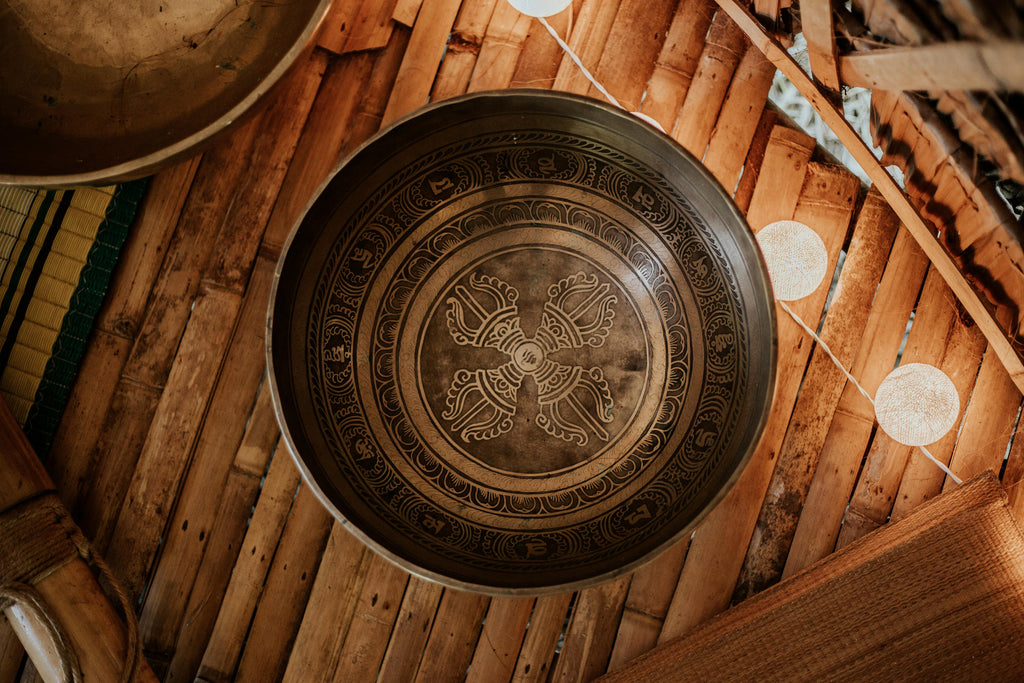
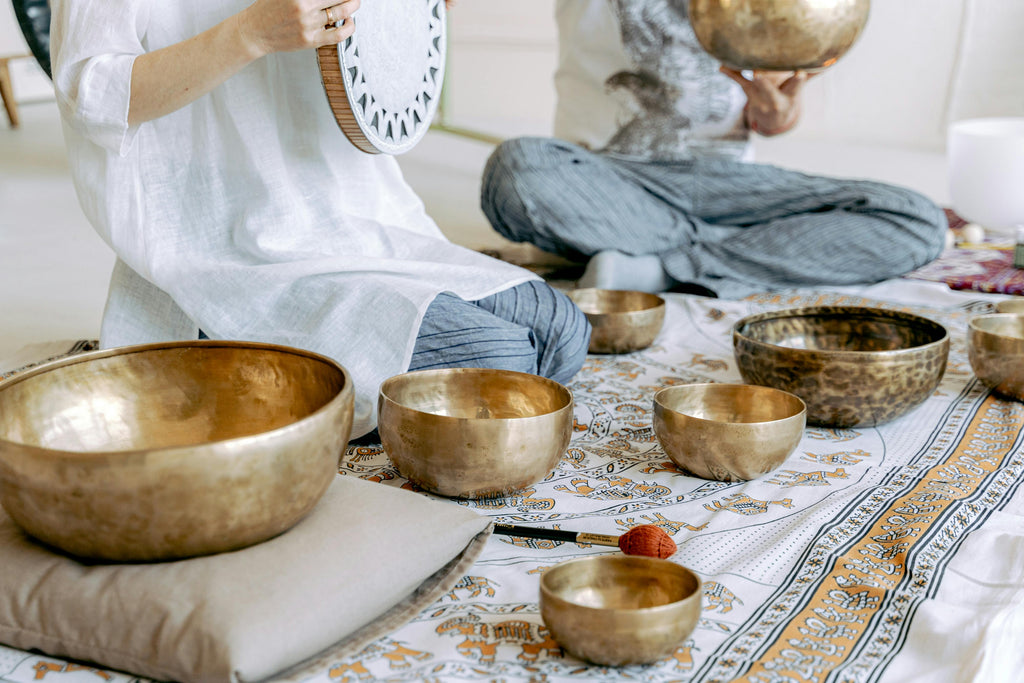
1. Tibetan Metal Singing Bowls (Traditional Hand-Hammered)
What They Are
Traditional Tibetan singing bowls are made from metal alloys—historically a combination of seven metals representing the seven planets of ancient astronomy: gold (Sun), silver (Moon), mercury (Mercury), copper (Venus), iron (Mars), tin (Jupiter), and lead (Saturn). Modern bowls typically contain three to five metals, with bronze (copper and tin) forming the base.
These bowls are hand-hammered, a process where skilled artisans shape heated metal through thousands of hammer strikes, creating the bowl’s characteristic dimpled exterior and smooth interior.
Sound Characteristics
Tonal quality: Warm, complex, rich in harmonic overtones Sustain: Medium to long (typically 30 seconds to 2 minutes) Frequency range: Usually lower to mid-range tones Vibration: Grounding, embracing, earthy quality
The hand-hammering process creates unique tonal characteristics in each bowl. Even bowls of similar size and weight will sound different due to variations in metal composition, hammering patterns, and thickness.
Best For
- Meditation and traditional spiritual practices
- Grounding work and lower chakra healing
- Those who appreciate organic, slightly imperfect sounds
- Practitioners wanting each bowl to have unique personality
- Creating warm, nurturing sonic environments
Size and Appearance
Tibetan bowls typically range from 3 to 16+ inches in diameter. They often feature:
- Hammered texture on the exterior
- Smooth or slightly textured interiors
- Golden to bronze coloring (may develop patina over time)
- Sometimes decorated with etched mantras or symbols
- Varying thickness affecting tone and weight
Price Range
$40-$500+ depending on size, age, craftsmanship, and whether antique or contemporary
Considerations
Pros: - Rich, complex sound with many overtones - Durable and long-lasting - Each bowl is unique - Traditional aesthetic and energy - Develops character over time
Cons: - Tonal variation means you can’t guarantee exact frequencies - Heavier than crystal bowls of equivalent size - May require more technique to play smoothly - Can tarnish and require polishing
Playing Tips
Traditional Tibetan bowls respond best to medium-firm pressure and consistent, slow rimming. They produce beautiful tones when struck and can create incredible sustain when rimmed properly. Learn detailed techniques in our guide on how to use singing bowls.
2. Crystal Singing Bowls (Quartz Crystal)
What They Are
Crystal singing bowls are made from pure quartz crystal (silica sand) that’s heated to approximately 4,000 degrees Fahrenheit and molded into bowl shapes. Most crystal bowls are “frosted” (opaque white), though “clear” (transparent) bowls are also available.
Unlike metal bowls with their ancient origins, crystal singing bowls were developed relatively recently—first appearing in the 1980s when manufacturers realized that quartz crucibles used in computer chip production could be shaped into singing bowls.
Sound Characteristics
Tonal quality: Pure, clear, penetrating Sustain: Very long (often 2-5 minutes or more) Frequency range: Wide range available, from very low to very high Vibration: Penetrating, activating, ethereal quality
Crystal bowls produce remarkably pure tones with fewer overtones than metal bowls. The sound feels more direct and focused, with a quality that many describe as “laser-like” in its ability to penetrate tissue and consciousness.
Best For
- Chakra healing and energy work
- Professional sound healing practitioners
- Large group sound baths
- Working with specific precise frequencies
- Those who prefer pure, clear tones
- Upper chakra and spiritual connection work
Size and Appearance
Crystal bowls range from 6 to 24+ inches in diameter. Characteristics include:
Frosted bowls: - Opaque white appearance - Slightly grainy texture - Often etched with chakra symbols, sacred geometry, or mantras - Warmer, more grounded tone than clear bowls
Clear bowls: - Transparent, glass-like appearance - Smooth surfaces - Brighter, more penetrating tones - Often more expensive than frosted bowls
Price Range
$100-$2,000+ depending on size, clarity (frosted vs. clear), and special tunings
Considerations
Pros: - Extremely pure, consistent tones - Can be precisely tuned to exact frequencies - Very long sustain - Powerful vibrations - Modern, clean aesthetic
Cons: - More fragile than metal bowls - Expensive, especially in larger sizes - Some find the pure tones too intense or “cold” - Require careful handling and storage - Heavy (larger bowls can weigh 10-15 pounds)
Playing Tips
Crystal bowls respond to lighter touch than metal bowls. Strike gently and rim with moderate, consistent pressure. Frosted bowls are generally easier to rim than clear bowls. The sound can be overwhelming in small spaces, so start gently.
3. Machine-Made Tibetan Singing Bowls
What They Are
These are metal singing bowls produced through modern manufacturing processes like casting, pressing, or die-forming rather than hand-hammering. They’re made from similar metal alloys as traditional bowls but shaped using machines for consistency and efficiency.
Sound Characteristics
Tonal quality: Clearer and more consistent than hand-hammered bowls, but less complex Sustain: Medium (typically 20-60 seconds) Frequency range: Wide range available with more consistent tuning Vibration: Balanced, pleasant, less “character” than hand-hammered
Machine-made bowls produce more uniform tones than hand-hammered versions. Multiple bowls of the same size and model will sound nearly identical, which can be an advantage or disadvantage depending on your perspective.
Best For
- Beginners learning technique
- Those wanting specific, consistent tuning
- Budget-conscious practitioners
- Completing chakra sets with precise frequencies
- Settings where uniformity is preferred
- People who find hand-hammered bowls too irregular
Size and Appearance
Generally range from 4 to 12 inches. Features include:
- Smooth, uniform surfaces (exterior and interior)
- Consistent thickness throughout
- Often stamped with symbols or designs
- Bright, new-looking finish
- More industrial appearance than hand-hammered bowls
Price Range
$25-$150 depending on size and quality
Considerations
Pros: - Affordable - Consistent tuning and quality - Easier to match specific notes or frequencies - Lower learning curve for beginners - Lightweight and durable
Cons: - Less character and uniqueness - Simpler harmonic structure - May feel less “authentic” to traditionalists - Generic appearance - Don’t develop patina or age aesthetically
Playing Tips
Machine-made bowls are very forgiving and easy to play, making them excellent for beginners. They rim easily and produce clean strikes with minimal technique required.
4. Chakra-Tuned Singing Bowls
What They Are
Chakra singing bowls are specifically tuned to frequencies corresponding to the body’s seven main energy centers (chakras). These can be either crystal or metal bowls, hand-hammered or machine-made—what defines them is their intentional tuning to chakra frequencies.
Each chakra bowl is tuned to a specific note: - Root (C) - Sacral (D) - Solar Plexus (E) - Heart (F) - Throat (G) - Third Eye (A) - Crown (B)
Sound Characteristics
Tonal quality: Varies by material (crystal vs. metal) but precise to chakra frequency Sustain: Depends on bowl type and size Frequency range: Covers full spectrum from low C to high B Vibration: Targeted, specific to energetic application
Each bowl creates the frequency believed to resonate with and balance a specific chakra. Many practitioners report distinct physical sensations in the corresponding body area when hearing “their” chakra’s tone.
Best For
- Energy healing and chakra balancing work
- Yoga teachers incorporating sound into classes
- Holistic practitioners offering multi-modality sessions
- Systematic meditation practices
- Learning about energy anatomy
- Building a comprehensive bowl collection
Size and Appearance
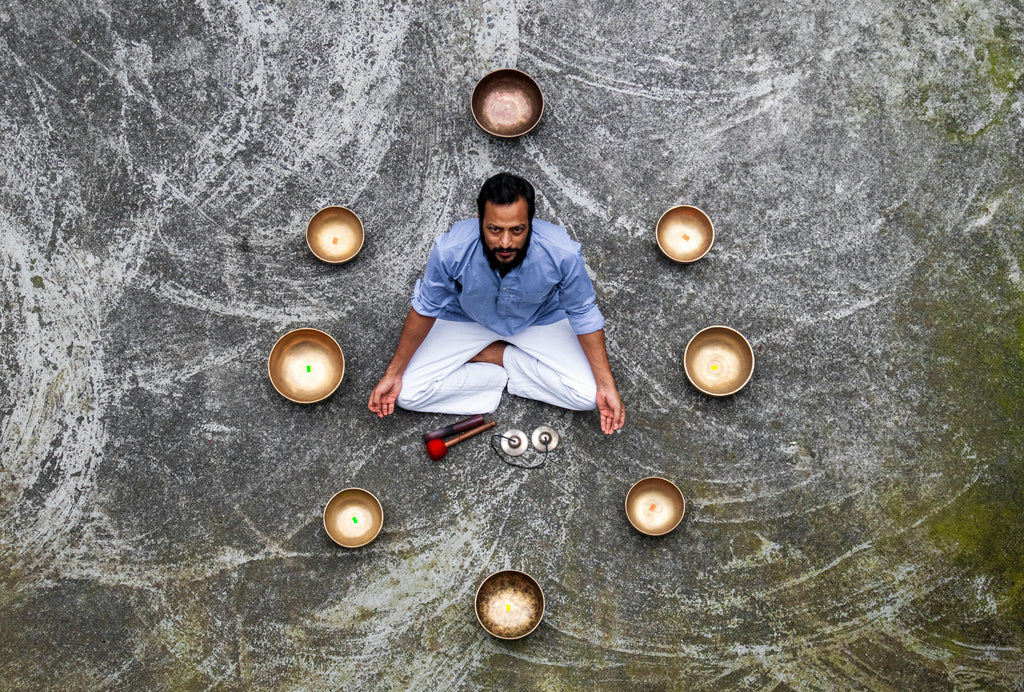
Chakra sets typically include: - 7 bowls (one per chakra) - Size progression from large (root) to small (crown), or uniform sizes - Often color-coded (red/root, orange/sacral, etc.) - May be etched with chakra symbols - Available in both crystal and metal
Price Range
Individual chakra bowls: $50-$300 Complete 7-bowl sets: $400-$2,500+ depending on material and quality
Considerations
Pros: - Systematic approach to energy work - Educational for learning chakra system - Complete frequency spectrum - Often sold as matched sets - Clear application for each bowl
Cons: - Expensive to purchase complete sets - Requires storage space for multiple bowls - Learning curve for working with multiple bowls - Some find rigid chakra associations limiting - May be more bowls than beginners need
Playing Tips
For chakra balancing sessions, practitioners typically progress from root to crown (ascending) for energizing work, or crown to root (descending) for grounding work. Each chakra bowl can also be used independently for targeted work.
To dive deeper into chakra frequencies and applications, read our comprehensive singing bowl frequency guide.
5. Antique and Vintage Tibetan Singing Bowls
What They Are
Antique singing bowls are traditional Tibetan bowls that are genuinely old—typically 80-150+ years. Vintage bowls are somewhat newer, usually 30-80 years old. These bowls were made using traditional methods and have aged naturally, often developing unique patinas and characteristics.
True antique bowls have documented histories, sometimes including information about the region and era they were made. However, the antique bowl market includes many “aged” modern bowls passed off as antiques, so purchase from reputable dealers.
Sound Characteristics
Tonal quality: Exceptionally complex harmonics developed over decades of aging Sustain: Often very long due to metal composition and aging process Frequency range: Varies widely; each is unique Vibration: Rich, deep, mature sound quality that’s difficult to describe but unmistakable
Many sound healing practitioners swear by antique bowls, claiming they possess superior sound quality and “energy” compared to new bowls. Whether this is due to physical properties (metal aging), psychological factors (knowing you’re using an antique), or genuine energetic accumulation is debated, but the experience is undeniably different.
Best For
- Serious practitioners and collectors
- Those wanting unique, one-of-a-kind instruments
- Meditation practices honoring traditional lineages
- Creating profound, deeply resonant sound experiences
- Professional sound healers seeking exceptional instruments
- People drawn to historical objects and their stories
Size and Appearance
Antique bowls vary enormously but often feature:
- Natural patina (greenish, brownish, or dark gray coloring)
- Signs of age (small dents, wear marks, repairs)
- Thicker, heavier construction than most modern bowls
- Hand-hammered textures and irregularities
- Sometimes etched with mantras or symbols
- Unique shapes and rim styles
Price Range
$200-$5,000+ depending on age, size, provenance, sound quality, and rarity
Considerations
Pros: - Exceptional, unique sound quality - Historical significance and energy - Investment value (genuine antiques often appreciate) - Connection to traditional lineages - Conversation pieces and treasured objects
Cons: - Very expensive - Difficult to authenticate (many fakes in market) - May have imperfections or damage - Often less consistent in tuning - Concerns about cultural appropriation and ethical sourcing
Playing Tips
Treat antique bowls with respect and care. They often require specific techniques to produce their best sound. Some have quirks—sweet spots that sound beautiful and dead zones that don’t resonate well. Spend time getting to know your antique bowl’s personality.
How to Choose Your Type
With five distinct types to choose from, how do you decide? Consider these factors:
Your Experience Level
Beginners: Start with machine-made metal bowls or mid-range crystal bowls. They’re affordable, forgiving, and help you learn technique without investing heavily.
Intermediate: Explore hand-hammered Tibetan bowls or begin building a chakra-tuned collection.
Advanced: Consider antique bowls, high-end crystal bowls, or comprehensive chakra sets.
Your Practice Focus
General meditation: Hand-hammered Tibetan or medium crystal bowls Energy healing: Chakra-tuned sets (crystal or metal) Sound baths: Crystal bowls for groups, Tibetan for intimate settings Traditional practice: Hand-hammered or antique Tibetan bowls Portable practice: Small machine-made metal bowls
Your Budget
Under $100: Machine-made metal bowls $100-$300: Hand-hammered metal or smaller crystal bowls $300-$1,000: Multiple hand-hammered bowls, medium crystal bowls, or partial chakra sets $1,000+: Large crystal bowls, antique bowls, or complete chakra sets
Your Sound Preference
Warm, complex, organic: Hand-hammered Tibetan or antique bowls Pure, clear, penetrating: Crystal bowls Balanced and accessible: Machine-made metal bowls Frequency-specific: Chakra-tuned (any material)
Space and Portability
Small space/travel: Machine-made metal bowls (4-6 inches) Home practice: Any type works; consider storage for multiple bowls Professional practice: Invest in diverse collection spanning types
Combining Different Types
Many experienced practitioners use multiple bowl types in their practice:
- Metal and crystal: Combine warm and clear tones for layered soundscapes
- Various sizes: Create full frequency range from bass to treble
- Chakra and general: Specific chakra work plus versatile meditation bowls
- Antique and modern: Honor tradition while accessing precision of new instruments
The magic often happens when different types interact, creating complex harmonics and therapeutic frequency combinations.
Where to Start
If you’re purchasing your first singing bowl, we recommend:
- Listen first: If possible, hear different types in person or via high-quality recordings
- Start simple: One quality bowl is better than multiple mediocre ones
- Trust resonance: Choose the type that speaks to you emotionally, not just intellectually
- Consider growth: Buy with future expansion in mind, but don’t over-commit initially
- Research sellers: Purchase from reputable dealers, especially for antiques or expensive bowls
Our comprehensive singing bowl buyers guide provides detailed guidance on selecting, purchasing, and beginning your practice.
The Bottom Line
Each type of singing bowl offers unique qualities and benefits:
- Tibetan metal (hand-hammered): Traditional, complex, warm
- Crystal: Pure, powerful, precise
- Machine-made: Affordable, consistent, beginner-friendly
- Chakra-tuned: Systematic, educational, comprehensive
- Antique: Unique, resonant, historically significant
The “best” type is the one that resonates with your practice, budget, and intentions. Many practitioners ultimately own multiple types, using different bowls for different purposes.
Ready to find your perfect singing bowl? Explore our curated collection, featuring all major bowl types to suit every practice and preference.
Your ideal bowl type is waiting to add its unique voice to your healing journey.
Frequently Asked Questions
Can I use different types of bowls together?
Absolutely! Combining crystal and metal bowls, or mixing antique and modern bowls, creates rich, layered soundscapes. Many professional practitioners use diverse collections.
Are crystal bowls better than metal bowls?
Neither is objectively better—they’re different. Crystal offers pure tones and long sustain; metal provides warm complexity. Choose based on your sound preference and application.
How do I know if an antique bowl is genuine?
Work with reputable dealers who provide authenticity documentation. Learn to recognize signs of age, construction techniques, and be wary of deals that seem too good to be true. Many “antique” bowls are artificially aged modern bowls.
Should beginners start with a chakra set or a single bowl?
Most beginners benefit from starting with one quality bowl (typically heart or solar plexus chakra/F or E note) to learn technique before investing in a full set.
Do I need different strikers for different bowl types?
Generally, yes. Crystal bowls use rubber-wrapped strikers; metal bowls use wooden or leather-wrapped strikers. Larger bowls need larger, heavier strikers. Quality bowls usually come with appropriate strikers.
Discover every type of singing bowl in our comprehensive collection. From traditional Tibetan to modern crystal, find the perfect instrument for your practice.
Related post

04
Sep
03
Sep
02
Sep
22
Apr
21
Nov
RECENT POSTS