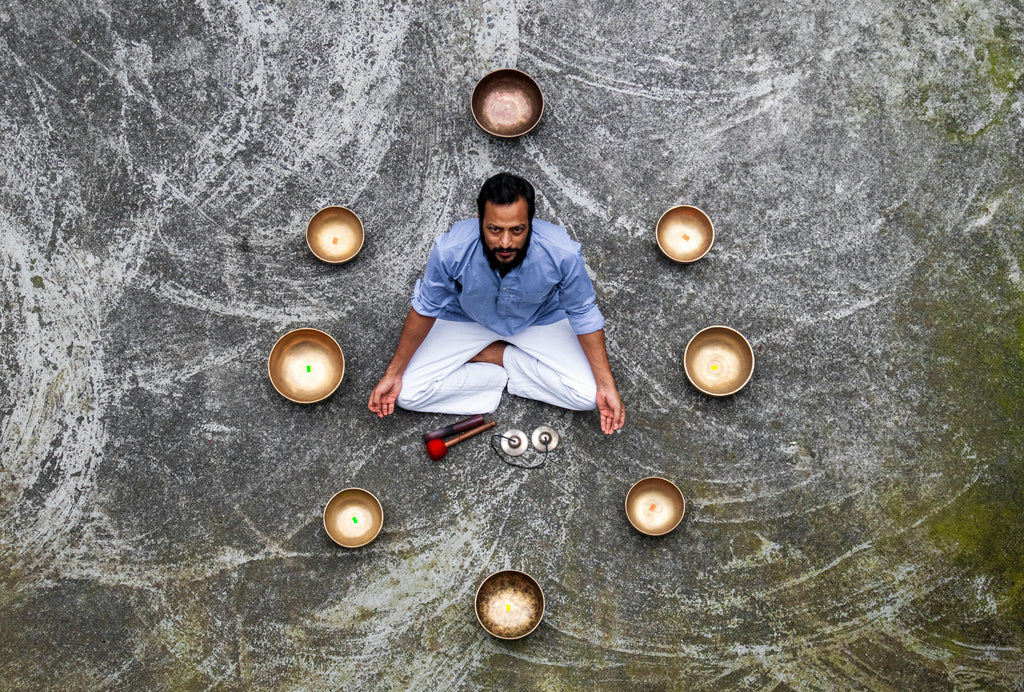
Singing Bowl Frequency Guide
Singing Bowl Frequency Guide: Understanding Sound Healing Vibrations
The healing power of singing bowls lies not just in their beautiful tones, but in the specific frequencies they produce. Understanding singing bowl frequencies can help you choose bowls for specific purposes, work more effectively with chakras and energy systems, and deepen your sound healing meditation practice.
This comprehensive guide explores the science and spirituality of singing bowl frequencies, helping you harness their full therapeutic potential.
What Are Singing Bowl Frequencies?
Frequency refers to the number of vibration cycles per second, measured in Hertz (Hz). When a singing bowl vibrates, it creates sound waves at specific frequencies that travel through air—and through your body, which is roughly 70% water and thus an excellent conductor of vibration.
The Three Frequency Layers of Singing Bowls
When you play a quality singing bowl, you’re actually hearing multiple frequencies simultaneously:
Fundamental Frequency: The primary, most prominent tone you hear. This is the bowl’s base note (like C, D, E, etc.).
Harmonic Overtones: Secondary frequencies that vibrate at mathematical ratios to the fundamental. These create the richness and complexity of the bowl’s sound.
Binaural Beats: When playing two bowls (or hearing overtones), slight frequency differences between your left and right ears create a third perceived frequency in your brain, potentially influencing brainwave states.
This layered frequency complexity is what makes singing bowls uniquely powerful for healing and meditation.
The Science of Frequency and Healing
Modern research is beginning to validate ancient knowledge about sound healing frequencies:
Brainwave Entrainment
Your brain naturally operates at different frequencies depending on your state of consciousness:
- Beta waves (13-30 Hz): Active thinking, alertness, sometimes stress or anxiety
- Alpha waves (8-13 Hz): Relaxed awareness, light meditation, creativity
- Theta waves (4-8 Hz): Deep meditation, intuition, REM sleep
- Delta waves (0.5-4 Hz): Deep sleep, healing, unconscious processes
Singing bowl frequencies can help shift your brainwaves from higher, more active states into slower, more relaxed states through a process called entrainment—your brain naturally synchronizes with external rhythms and frequencies.
Cellular Resonance
Everything in your body vibrates at specific frequencies, from individual cells to organs and systems. When you’re healthy, these frequencies are harmonious. Stress, illness, or trauma can disrupt these natural frequencies.
Sound healing theory suggests that external frequencies from singing bowls can help restore optimal vibration patterns in the body. While research is ongoing, many practitioners and recipients report feeling physical shifts, releases, and healing during sound therapy sessions.
The Vagus Nerve Response
Certain sound frequencies stimulate the vagus nerve, the longest cranial nerve that connects your brain to your heart, lungs, and digestive system. Activating the vagus nerve triggers the parasympathetic nervous system—your “rest and digest” mode—creating:
- Reduced heart rate and blood pressure
- Decreased cortisol (stress hormone) production
- Improved digestion and immune function
- Enhanced sense of calm and safety
Musical Notes and Frequencies
Singing bowls are often tuned to standard musical notes. Here are the frequencies for notes in the middle octave (often called the 4th octave):
| Note | Frequency (Hz) | Associated Quality |
|---|---|---|
| C | 261.63 | Grounding, stability |
| C# | 277.18 | Transformation |
| D | 293.66 | Creativity, flow |
| D# | 311.13 | Emotional release |
| E | 329.63 | Personal power |
| F | 349.23 | Love, compassion |
| F# | 369.99 | Devotion |
| G | 392.00 | Expression, truth |
| G# | 415.30 | Vision |
| A | 440.00 | Intuition, clarity |
| A# | 466.16 | Spiritual connection |
| B | 493.88 | Higher consciousness |
Note: Singing bowls may be tuned to any octave. A C note, for instance, can range from about 130 Hz (low C) to over 2,000 Hz (very high C). The specific octave affects the character and applications of the frequency.
Chakra Frequencies and Singing Bowls
One of the most common applications of frequency-specific singing bowls is chakra balancing. Chakra singing bowls are tuned to frequencies believed to resonate with each of the body’s seven main energy centers.
The Seven Chakras and Their Frequencies
While different traditions cite varying frequencies, here’s a widely-accepted system based on the Pythagorean musical scale:
Root Chakra (Muladhara) - Note: C - Frequency range: 256-264 Hz - Location: Base of spine - Associated with: Grounding, security, survival, physical vitality - Bowl recommendation: Large, low-toned bowl (10-14 inches)
Sacral Chakra (Svadhisthana) - Note: D - Frequency range: 288-297 Hz - Location: Lower abdomen, below navel - Associated with: Creativity, pleasure, emotions, sexuality - Bowl recommendation: Large to medium bowl (9-12 inches)
Solar Plexus Chakra (Manipura) - Note: E - Frequency range: 320-330 Hz - Location: Upper abdomen, below ribcage - Associated with: Personal power, confidence, willpower, digestion - Bowl recommendation: Medium bowl (8-10 inches)
Heart Chakra (Anahata) - Note: F - Frequency range: 341-352 Hz - Location: Center of chest - Associated with: Love, compassion, connection, acceptance - Bowl recommendation: Medium bowl (7-9 inches)
Throat Chakra (Vishuddha) - Note: G - Frequency range: 384-396 Hz - Location: Throat - Associated with: Communication, truth, self-expression, authenticity - Bowl recommendation: Small to medium bowl (6-8 inches)
Third Eye Chakra (Ajna) - Note: A - Frequency range: 426-440 Hz - Location: Between eyebrows, forehead - Associated with: Intuition, insight, imagination, wisdom - Bowl recommendation: Small bowl (5-7 inches)
Crown Chakra (Sahasrara) - Note: B - Frequency range: 480-495 Hz - Location: Top of head - Associated with: Spiritual connection, consciousness, enlightenment - Bowl recommendation: Small bowl (4-6 inches)
Alternative Chakra Frequency Systems
Different healing traditions use various frequency assignments for chakras:
Solfeggio Frequencies: An ancient six-tone scale (396 Hz, 417 Hz, 528 Hz, 639 Hz, 741 Hz, 852 Hz) believed to have special spiritual and healing properties.
Planetary Frequencies: Some practitioners tune bowls to frequencies calculated from planetary orbits and rotations, believed to connect earth-based healing with cosmic energies.
Hz-Based Tuning: Some modern practitioners work with specific Hz frequencies rather than musical notes (such as 432 Hz, considered by some to be more naturally harmonious than the standard 440 Hz tuning).
The system you choose often depends on your tradition, training, and personal resonance. What matters most is consistency within your practice and attunement to the effects you experience.
Special Healing Frequencies
Beyond chakra work, certain frequencies are believed to offer specific therapeutic benefits:
432 Hz - The “Natural” Frequency
Some practitioners prefer singing bowls tuned to A=432 Hz (rather than the modern standard A=440 Hz), believing this frequency:
- Resonates more harmoniously with nature
- Feels more soothing and grounding
- Aligns better with the human body’s natural frequencies
- Creates a sense of peace and wholeness
While scientific evidence for 432 Hz’s superiority is debated, many people report preferring its quality subjectively.
528 Hz - The “Love” Frequency
Part of the Solfeggio scale, 528 Hz is called the “miracle tone” and is associated with:
- DNA repair (though scientific evidence is limited)
- Transformation and positive change
- Heart chakra activation
- Enhanced clarity and peace
396 Hz - Liberation Frequency
The first Solfeggio frequency, 396 Hz is believed to help:
- Release fear and guilt
- Ground energy
- Clear energetic blockages
- Support root chakra healing
174 Hz - Foundation Frequency
This low frequency is thought to:
- Reduce physical pain
- Provide a sense of safety and love
- Ground and stabilize energy
- Support deep relaxation
Crystal vs. Metal Bowl Frequencies
The material of your singing bowl affects how it produces and sustains frequencies:
Crystal Singing Bowls
- Pure tones: Crystal bowls produce very clear, focused fundamental frequencies
- Extended sustain: Frequencies maintain for longer periods (often 2-4 minutes)
- Penetrating quality: Crystal frequencies feel more penetrating, reaching deeper into tissue
- Precise tuning: Can be manufactured to exact frequencies consistently
- Higher octaves: Often available in higher frequency ranges than metal bowls
Tibetan Metal Bowls
- Complex harmonics: Metal bowls create rich overtone structures
- Warmer sound: Frequencies feel more grounded and embracing
- Variable tuning: Hand-hammered bowls may vary slightly in frequency
- Frequency drift: Frequencies may shift subtly based on temperature and playing technique
- Traditional tones: Often produce lower, earthier frequencies
Neither type is inherently superior—choice depends on personal preference and intended application. Many practitioners use both types to access different frequency qualities.
Measuring Singing Bowl Frequencies
If you want to know the exact frequency of your singing bowl:
Using Apps
Numerous smartphone apps can measure frequency:
- Tuner apps (designed for musical instruments)
- Sound frequency analyzers
- Spectral analysis apps
How to measure: 1. Download a tuner or frequency analyzer app 2. Place your phone near the bowl 3. Play the bowl (striking usually gives clearer readings than rimming) 4. Note the fundamental frequency and any prominent overtones
Professional Tuning Devices
Professional-grade electronic tuners provide highly accurate frequency measurements. These are worthwhile investments if you’re building a precise collection of frequency-specific bowls.
Understanding the Readings
When measuring your bowl:
- Fundamental frequency: The lowest, strongest frequency shown
- Overtones: Additional frequencies visible in spectral analysis
- Note: The musical note closest to the measured frequency
- Cents: Tuners show how many “cents” sharp or flat the bowl is from perfect pitch
Perfect tuning isn’t always necessary—slightly “out of tune” bowls can create interesting binaural beats when played together.
Using Frequency Knowledge in Practice
Selecting Bowls for Specific Needs
For grounding and stability: Choose lower frequency bowls (C and D notes, 200-300 Hz range)
For heart-opening and emotional work: Select mid-range frequencies (F and G notes, 340-400 Hz)
For clarity and spiritual connection: Use higher frequency bowls (A and B notes, 420-500 Hz)
For comprehensive work: Build a collection spanning low to high frequencies
Sequencing Frequencies
When using multiple bowls in practice:
Ascending sequence (low to high): Moves energy upward, activates, energizes Descending sequence (high to low): Moves energy downward, calms, grounds Chakra progression (root to crown): Systematically balances all energy centers Intuitive play: Follow your sense of what’s needed in the moment
Combining Frequencies
Playing two or more bowls simultaneously creates:
- Harmony: Frequencies that blend pleasantly (like C and G, E and B)
- Dissonance: Frequencies that create tension (can be useful for releasing stuck energy)
- Binaural beats: Slight frequency differences creating third perceived frequency
Experiment with different combinations to discover which frequency relationships resonate with you and serve your practice.
Frequency Considerations When Buying
When purchasing frequency-specific singing bowls:
Verify the Tuning
- Request the exact frequency (Hz) or musical note
- Ask if the bowl was tested and verified
- Understand whether tuning is to A=440 Hz or A=432 Hz standard
- Know which octave the note is in (this significantly affects character)
Tolerance for Variation
- Hand-hammered bowls may vary slightly from stated frequency
- Decide how precise you need tuning to be
- Small variations (within 5-10 cents) generally won’t affect practice
- Very precise chakra work may require professionally tuned bowls
Playing Conditions
Remember that bowl frequency can be affected by:
- Temperature (extreme heat or cold can shift pitch slightly)
- Playing technique (hard vs. soft strikes, rimming speed)
- Striker material (wood vs. padded mallets create different overtone emphasis)
- Bowl placement (surfaces can affect resonance)
For a comprehensive guide to selecting the right singing bowl, including frequency considerations, read our singing bowl buyers guide.
Frequency Myths and Misconceptions
As interest in sound healing has grown, some misconceptions have emerged:
Myth: Higher frequencies are always more spiritual or advanced. Reality: All frequencies serve important purposes. Low frequencies ground and stabilize; high frequencies clarify and activate. You need the full spectrum.
Myth: You must match bowl frequencies exactly to chakra charts. Reality: While traditional correspondences are helpful guides, trust your experience. A bowl that resonates with you emotionally may be more beneficial than one that’s “technically correct.”
Myth: Only specific frequencies can heal. Reality: While certain frequencies may be particularly effective for specific purposes, the quality of your attention, intention, and presence matter as much as exact Hz measurements.
Myth: Crystal bowls are better because they’re “purer” frequencies. Reality: Crystal and metal bowls offer different but equally valuable frequency experiences. The “best” choice is the one that resonates with you and serves your practice.
Deepening Your Frequency Practice
As you develop sensitivity to singing bowl frequencies:
- Notice how different frequencies feel in your body
- Observe emotional or mental states that arise with various tones
- Track which frequencies you’re drawn to at different times
- Experiment with frequency progressions and combinations
- Trust your direct experience over theoretical frameworks
The goal isn’t intellectual mastery of frequency theory but embodied sensitivity to how specific vibrations affect you. Let your singing bowl practice be both scientifically informed and intuitively guided.
The Future of Frequency Healing
Research into sound healing and therapeutic frequencies is expanding. Scientists are exploring:
- Specific frequencies for pain management
- Sound’s role in reducing inflammation
- Frequency applications in mental health treatment
- How sound affects cellular and molecular processes
As our understanding grows, the ancient practice of working with healing frequencies finds validation and refinement through modern science—a beautiful marriage of timeless wisdom and contemporary knowledge.
Ready to explore the world of singing bowl frequencies? Browse our collection of singing bowls or learn more about their benefits and how to use them effectively.
The perfect frequency is waiting to resonate with your unique healing journey.
Discover precisely tuned singing bowls for every frequency need. Explore our collection of chakra-tuned, Solfeggio, and traditional frequency bowls.
Related post

04
Sep

03
Sep
02
Sep
22
Apr
21
Nov
RECENT POSTS